




The cart is the cheap part. A used espresso cart with a decent machine can be on the road for less than the leasehold improvements alone on a sit-down cafe.
What decides whether a mobile coffee business survives its first year in Canada is not the equipment — it's the permit map and the booking calendar. Get those two right and the margins take care of themselves.
The short answer.
Starting a mobile coffee cart in Canada runs roughly $10,000–$45,000: a cart or trailer, a portable espresso setup, water and power, and your first round of permits and insurance. That's a fraction of a bricks-and-mortar cafe — but you trade rent for a calendar you have to fill, event by event.
Everything below is in Canadian dollars, priced as 2026 planning ranges. Get real quotes locally before you commit; used-equipment prices swing hard by city and season.
What the setup actually costs
| Line item | Range | Notes |
|---|---|---|
| Cart or trailer | $3,000–$25,000 | Used carts at the low end; new custom trailers well above |
| Espresso machine (portable) | $2,000–$8,000 | Manual lever machines run without constant power |
| Grinder | $500–$2,000 | Don't cheap out; it shapes the cup more than the machine |
| Water system (fresh + grey tanks, pump, filtration) | $500–$1,500 | Health authorities inspect this first |
| Power (quiet generator or battery) | $500–$3,000 | Many venues ban loud generators; ask before you buy |
| Permits, licences, insurance (year one) | $1,500–$4,000 | Varies sharply by province and city; see below |
| Opening inventory + small wares | $1,500–$3,000 | Beans, milk, cups, syrups, cleaning kit |
| Total | ~$10,000–$45,000 |
The permit stack (this is what trips people)
A coffee cart is a food business that moves, which means you answer to more than one authority:
- Business registration plus a GST/HST number.
- Food-handler certification: FoodSafe in BC, SafeFood in Alberta, Food Handler Certificate in Ontario.
- Mobile food vending permit from your city — and this is the sharp edge. Rules on where you can park, how long you can stay, and how close you can be to a bricks-and-mortar restaurant differ street by street. Read your city's mobile vending bylaw before you buy the cart, not after.
- Health inspection of the cart itself: water tanks, hand-wash station, refrigeration.
- Liability insurance: most event organizers won't book you without proof of $2 million in coverage.
- A commissary agreement in many cities: a licensed commercial kitchen where you store, prep, and clean up. Budget for this — it's the rent you thought you'd escaped, in miniature.
Where the money actually is
Street service builds the brand; bookings pay the bills. Weddings, corporate mornings, farmers markets, and festival pop-ups let you charge a flat rate for a set window instead of gambling on foot traffic, and the calendar is predictable enough to plan staffing around. Treat the street as marketing for the booking pipeline, not the other way around.
Our own honest bias: we're not cart operators. We're a Calgary workshop that engraves cups, and cafes are some of our wholesale customers. From that seat, the pattern is hard to miss — the mobile businesses that last are the ones that turn one wedding gig into three more.
The cup is your only permanent signage
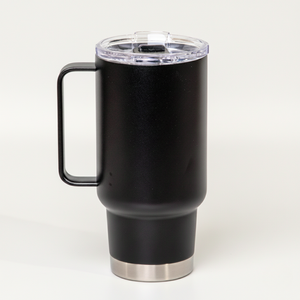
A cart has no storefront. When the event ends and you roll away, the only thing left behind is whatever the guests are still holding. A paper cup goes in the bin with your logo on it. A steel tumbler with the couple's names and your cart's mark engraved into it sits on someone's desk for years.
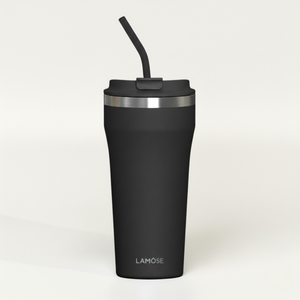
That's the piece we make. LAMOSE engraves tumblers and bottles in our Calgary workshop: the laser cuts through the powder coat into bare 18/8 stainless steel, so the mark is permanent. Sell them at the cart, or pitch them to your corporate and wedding clients as the take-home. Wholesale runs are quoted per project, small runs included, and every piece can carry a different name.
For your cart
Branded tumblers, engraved in Calgary
The Grouse 16 oz keeps heat for 6 hours and cold for 12, and it keeps your logo forever. Engraved to order, shipped in 1–3 business days.
Get a wholesale quote →Frequently asked questions
How much does it cost to start a coffee cart in Canada?
Plan on $10,000–$45,000: a used cart with a portable espresso setup lands near the bottom of that range, a new custom trailer near the top. Permits, insurance, and a commissary kitchen agreement add $1,500–$4,000 in year one.
Do I need a permit to sell coffee from a cart?
Yes: several. Business registration, food-handler certification, a mobile vending permit from your city, a health inspection of the cart, and liability insurance. Event bookings on private property often skip the street-vending permit but still require insurance.
Is a coffee cart more profitable than a coffee shop?
It's less risky, not automatically more profitable. You skip rent and buildout, but revenue depends on how many event days you book. Operators who fill a season's calendar with weddings and corporate mornings do well; carts that rely on walk-up traffic alone struggle through winter.
Can I run a coffee cart year-round in Canada?
Outdoors, mostly no: weather ends patio season in much of the country. Year-round operators chain indoor bookings: office lobbies, markets, conferences, and winter weddings.
By Chen Deng, founder of LAMOSE. Figures are 2026 planning estimates — get local quotes before you sign anything. We engrave branded tumblers in our Calgary workshop for cafes and carts, one piece or five hundred.