






Most juice bar dreams die on a spreadsheet — the line where a storefront lease turns a $20,000 plan into a $120,000 one. It doesn't have to start that way.
To start a juice bar in Canada, pick your format first: mobile cart, kiosk, storefront, or ghost kitchen. That one choice sets your rent, your risk, and your budget — anywhere from $8,000 to $150,000. Add a food service permit, food handler certification, and GST registration once you clear $30,000 a year. The owners who last almost always test with a cart before they sign a lease.
Pick Your Format Before Anything Else
Your format decides your rent, your risk, and how fast you can change your mind. Here are the four models and what they actually cost to open in Canada.
| Format | Startup cost (CAD) | Best for | Biggest risk |
|---|---|---|---|
| Mobile juice cart | $8,000–$25,000 | Testing a concept at markets, gyms, festivals | Weather and event permits |
| Mall / food-court kiosk | $15,000–$40,000 | High foot traffic, grab-and-go | Landlord percentage rent |
| Delivery-only / ghost kitchen | $20,000–$50,000 | Dense cities, app-driven demand | A third of every order goes to the app |
| Full storefront | $50,000–$150,000 | Established brand, seating, dine-in | The lease you can't walk away from |
My honest read: start with a cart or a kiosk. You learn which blends sell, which hours are dead, and who your regulars are for a tenth of the storefront risk. Booster Juice and dozens of independents began as a single counter before anyone signed a ten-year lease. Prove the demand, then scale into walls.
What It Actually Costs
Here's a real breakdown for the two formats most people start with. All figures in Canadian dollars.
| Expense | Small kiosk | Mobile cart |
|---|---|---|
| Equipment | $5,000–$12,000 | $3,000–$8,000 |
| Leasehold / build-out | $3,000–$8,000 | $500–$2,000 |
| Opening inventory | $1,500–$3,000 | $800–$2,000 |
| Licences & permits | $800–$2,000 | $500–$1,500 |
| Branding & signage | $1,500–$4,000 | $800–$2,500 |
| First 3 months rent | $3,000–$9,000 | $0–$1,500 |
| Working capital | $2,000–$5,000 | $1,500–$4,000 |
| Total | $15,000–$40,000 | $8,000–$25,000 |
Can You Start a Juice Bar With No Money?
Not for free — but you can start for far less than the guides suggest. Three ways people do it in Canada:
- Rent a commercial kitchen by the hour. Shared and incubator kitchens let you cold-press and bottle without building your own space. You sell at markets and pop-ups.
- Start from home, sell wholesale. Some provinces allow home-based food prep under a local permit — check your health authority first, because raw juice carries strict rules. Bottle, label, and supply gyms, offices, and yoga studios.
- Lease your equipment. A commercial blender and a cold-press juicer are the two costs that hurt. Leasing spreads them over the months your revenue is ramping.
The pattern is the same every time: keep fixed costs near zero, let a cart or a kitchen rental prove the demand, then reinvest what you earn instead of what you borrow.
The Equipment That Actually Decides Open Day
Skip the 40-item checklist. Eight things gate whether you can open. Buy these first:
- Commercial high-speed blender. Vitamix or Blendtec, $500–$1,200. Buy two so one can be washed while the other runs.
- Cold-press juicer. Only if cold-pressed juice is on your menu. $2,000–$8,000, and it's the single biggest line item.
- Reach-in commercial refrigerator. $2,000–$4,000.
- Glass-door display fridge. For grab-and-go bottles at the counter. $1,500–$3,500.
- Three-compartment sink. A health-inspection requirement, not optional. $500–$1,500.
- Stainless prep table. $400–$900.
- POS with card reader. Square, Clover, or Lightspeed. $800–$2,500.
- Cups, lids, and one branded reusable tumbler. Disposables for daily sales, plus a branded cup your regulars actually keep — more on that below.
Everything else you can add in month three once cash is flowing: extra blender jars, a centrifugal juicer, dispensers, digital menu boards. Buying it all on day one is how good concepts run out of money before they find their regulars.
Menu and Margins
Your menu is where the money is. Keep it short enough to run fast at rush, wide enough to bring people back.
| Category | Retail (CAD) | Rough margin |
|---|---|---|
| Signature smoothies | $8–$11 | 60–75% |
| Cold-pressed juice | $8–$13 | 50–65% |
| Acai / smoothie bowls | $11–$15 | 65–80% |
| Wellness shots (2 oz) | $3–$5 | High |
| Add-ons (protein, collagen, greens) | $1.50–$3 each | 85%+ |
Add-ons are the quiet profit. A scoop of protein or a greens boost costs you $0.20–$0.60 and sells for $2–$3. Push them at every order and your average ticket climbs a dollar or two without a single new customer.
The Counter Sale Most Owners Miss
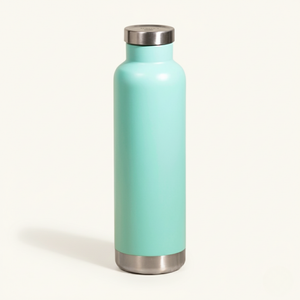
Here's the line most juice bars leave on the table: a branded reusable tumbler by the register. Sold as a retail item, it does two jobs at once.
It is a margin item: bought wholesale, it retails at a healthy multiple of what you paid. And every one that walks out is your logo in a hand, on a commute, in a gym, in a meeting where someone asks where it's from. That's a cup your customer keeps, and a sign your brand keeps working long after the smoothie's gone.
Counter tumblers from LAMOSE
We make branded reusable tumblers in a Calgary workshop: your logo, your colours, UV-printed full-wrap around 16 oz of 18/8 stainless steel — or laser-engraved into the surface so it can't peel. Pricing and minimums are quoted per project, and there is no overseas lag while you are trying to open. Same care behind 7,577 Etsy reviews at 4.9 stars, whether it's a dozen cups or five hundred.
Licences and Permits (and the Province Details)
Food service rules are provincial, so check your local health authority before you buy anything. The universal list across Canada:
- Food handler certification for all staff: $50–$150 each, valid 3–5 years.
- Municipal business licence: $100–$500 a year, varies by city.
- Food service establishment permit: $200–$800, and it requires a health inspection before you open.
- GST/HST registration: free through the CRA, required once you pass $30,000 in annual revenue.
- Provincial sales tax where it applies: BC PST, Saskatchewan PST, Manitoba RST, Quebec QST. Ontario and Alberta don't add one on top of GST/HST.
Opening in BC: book your health inspection through your regional health authority (Vancouver Coastal, Fraser Health, Island Health) and expect PST on retail goods like bottles and tumblers.
Opening in Toronto: you'll deal with Toronto Public Health for the food permit and the City of Toronto for the business licence. Food-court and mall kiosks often carry landlord requirements on top of the city's.
Frequently Asked Questions
How much does it cost to start a juice bar in Canada?
Between $8,000 and $150,000 depending on format. A mobile cart runs $8,000–$25,000, a kiosk $15,000–$40,000, and a full storefront $50,000–$150,000. Most owners start with a cart or kiosk to keep early risk low.
How do I start a juice bar with no money?
Rent a commercial kitchen by the hour, sell at markets and pop-ups, and lease your blender and juicer instead of buying them. Keep fixed costs near zero and reinvest revenue as demand proves out.
Can I run a juice business from home?
In some provinces, yes, under a local home-based food permit — but raw juice carries strict health rules, so confirm with your health authority first. Many home operators bottle and sell wholesale to gyms, offices, and studios.
What equipment do I need to open a juice bar?
The eight that gate open day: two commercial blenders, a cold-press juicer (if you sell cold-pressed), a reach-in fridge, a display fridge, a three-compartment sink, a prep table, and a POS. Add the rest once cash is flowing.
Do I need a licence to sell juice in Canada?
Yes — a municipal business licence, a food service establishment permit with a passed health inspection, food handler certification for staff, and GST/HST registration once you clear $30,000 a year.
By Chen Deng, LAMOSE · Calgary, Alberta. We make branded reusable tumblers for cafes, juice bars, and health shops across Canada — the cup your customers keep. Since 2017.