




The espresso machine gets all the attention. It is the shiny part, the photo on every cafe-opening blog. But quality used machines are everywhere, and even a new one is a single line item you pay once.
What quietly closes cafes is the six months of rent, payroll, and milk you pay before a Tuesday-morning line forms out the door. Budget for that gap, or do not sign the lease.
The short answer.
Opening a coffee shop in Canada runs roughly $80,000 to $250,000. A takeout kiosk lands near $55,000–$85,000. A full-service cafe with seating and a three-group machine climbs to $150,000–$250,000. The number that sinks most owners is not the equipment. It is the operating reserve you burn before the shop turns its first real profit.
Everything below is priced for a real 600–800 sq ft space, in Canadian dollars, in 2026.
What every dollar goes to
| Expense category | Budget range | Premium range |
|---|---|---|
| Lease / rent (monthly) | $2,000–$4,000 | $5,000–$8,000 |
| Leasehold improvements | $20,000–$40,000 | $50,000–$80,000 |
| Espresso machine | $5,000–$12,000 | $15,000–$25,000 |
| Grinder(s) | $1,000–$2,500 | $3,000–$5,000 |
| Other equipment | $5,000–$8,000 | $10,000–$15,000 |
| POS system | $1,000–$1,500 | $2,000–$3,000 |
| Initial inventory | $3,000–$5,000 | $6,000–$8,000 |
| Branded tumblers & cups | $1,000–$2,000 | $2,500–$3,000 |
| Licenses & permits | $500–$1,000 | $1,200–$2,000 |
| Marketing & signage | $2,000–$3,000 | $4,000–$5,000 |
| 3-month operating reserve | $15,000–$25,000 | $30,000–$40,000 |
| Total startup cost | $55,500–$104,000 | $123,700–$194,000 |
What rent looks like by city
Location moves your number more than any single piece of gear. Here is the monthly average for a 600–800 sq ft space:
- Calgary, AB: $2,500/month
- Montreal, QC: $3,200/month
- Toronto, ON: $5,500/month
- Vancouver, BC: $6,200/month
Most commercial leases want first and last month plus a deposit up front. Budget two to three times your monthly rent just to get the keys.
The equipment that actually matters
Espresso machine: $5,000–$25,000. Your loudest decision. A two-group semi-automatic (La Marzocco Linea Mini, Rancilio Classe 7) runs $8,000–$15,000. Single-group machines start at $5,000. A three-group for real volume reaches $25,000. Plan $800–$1,200 a year for maintenance.
Grinders: $1,000–$5,000. You need two minimum: one for espresso, one for filter. Budget grinders run $600–$800; a Mazzer Major or Mahlkönig EK43 is $2,000–$2,500 each. A good grinder shapes flavour as much as the machine does. Do not cheap out here.
Supporting gear: $5,000–$15,000. Commercial fridge ($1,500–$3,000), under-counter freezer ($800–$1,500), blender ($300–$800), batch brewer ($1,200–$2,500), water filtration ($500–$1,200), dishwasher ($2,000–$4,000), and small wares ($500–$1,000).
POS: $1,000–$3,000. Square for Restaurants (no upfront cost, 2.65% + 10¢ per tap) or Lightspeed ($1,200 hardware, $69–$199/month) both work in Canada. Add a tablet, receipt printer, and cash drawer.
Kiosk or full cafe: two real budgets
| Small kiosk | Full cafe | |
|---|---|---|
| Square footage | 300–500 sq ft | 1,000–1,500 sq ft |
| Seating | Takeout / 2–4 stools | 25–40 seats |
| Espresso machine | Single-group, $5,000–$8,000 | 3-group, $18,000–$25,000 |
| Leasehold improvements | $15,000–$25,000 | $60,000–$90,000 |
| Staff | 1–2 (owner-run) | 4–8 employees |
| Total startup cost | $55,000–$85,000 | $150,000–$250,000 |
If it is your first shop, start with the kiosk. Prove the corner works before you sign for the seats.
What licenses do you need to open a coffee shop in Canada?
Requirements shift by province and city, but every Canadian cafe needs the same core stack:
- Business registration — sole proprietorship ($60–$100) or incorporation ($200–$500 provincial, $200 federal) with a GST/HST number.
- Food handling certificate — FoodSafe (BC), SafeFood (AB), Food Handler Certificate (ON). $30–$120 per person.
- Health permit — annual food-premise licence from your local health authority. $150–$800.
- Building permit — for any renovation. $500–$5,000.
- Sign permit — $100–$500 in most cities.
- Fire inspection — one-time, $100–$300.
- SOCAN music licence — $300–$500/year if you play music.
Start the paperwork early. In Toronto and Vancouver the permit process can take three to six months, and your lease clock is already running. In Alberta the SafeFood certificate for managers and an Alberta Health Services permit cover most of it. In Quebec, a MAPAQ permit and Bill 96 French-signage compliance are non-negotiable.
What can you actually make?
Independent Canadian coffee shops typically pull $300–$800 in daily revenue, depending on foot traffic. In real numbers:
| Metric | Conservative | Moderate | Strong |
|---|---|---|---|
| Daily revenue | $300 | $550 | $800 |
| Monthly revenue | $9,000 | $16,500 | $24,000 |
| Annual revenue | $108,000 | $198,000 | $288,000 |
| Transactions/day | 50–60 | 90–110 | 130–160 |
| Average ticket | $5.50 | $6.00 | $6.50 |
Here is the honest part: most shops take 12–24 months to break even, and the first six months underperform while you build regulars. A single grande latte costs about $1.95 to make (beans $0.40, milk $0.35, cup $0.30, three minutes of labour $0.90) and sells for $5.50 — a 65% margin. The margin is real. The timeline is longer than anyone tells you.
The revenue stream most owners leave on the counter
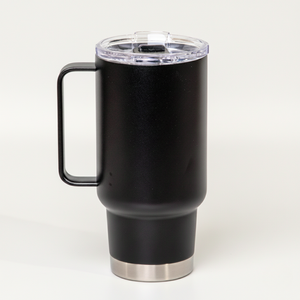
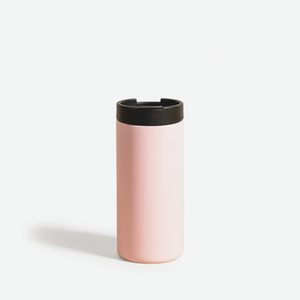
Espresso drinks earn 65–80%. Food earns 50–60%. Retail beans earn 40–50%. And branded tumblers — the ones with your logo that a regular carries to work every day — earn 60–70% and advertise you across the city for free.
Cheap ceramic mugs are pure expense: they break, they walk, they never leave the room. A branded tumbler a regular actually keeps on their desk is the cheapest marketing a new cafe will ever run. Sell ten a month at $30 and that is roughly $3,600 a year in near-passive margin, plus a discount hook to pull those cups back through your door and cut disposable-cup costs.
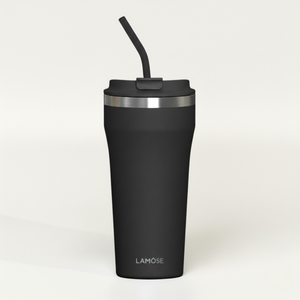
That is the one piece we know cold. LAMOSE makes branded tumblers in our Calgary workshop — double-wall 18/8 stainless steel, your logo laser-engraved to last, wholesale in small runs so you are not buying a pallet before you have sold a cup.
For your counter
Branded Tumblers for Your Cafe
Your logo cut into the steel of a Grouse 16 oz (6 hours hot, 12 cold), engraved to order in Calgary. Wholesale runs are quoted per project, small test runs included, so you are not buying a pallet before you have sold a cup.
See how the wholesale program works →Ten ways to open for less
- Buy quality used equipment. Refurbished machines, grinders, and refrigeration save 40–60%. Check Espresso Canada, Kijiji's commercial section, and restaurant auctions. Get it inspected first. Saves $15,000–$30,000.
- Start small, scale later. A 400 sq ft kiosk proves the concept before you commit to a full build. Saves $50,000–$100,000.
- Negotiate the lease. Ask for three months' free rent during buildout, a tenant-improvement allowance ($10,000–$30,000 is negotiable), or graduated rent. Saves $6,000–$15,000 year one.
- DIY the non-critical work. Paint, secondhand furniture, simple shelving. Pay pros only for plumbing, electrical, and machine installs. Saves $5,000–$12,000.
- Limit the opening menu. Espresso drinks and a few pastries from a local baker. Expand once you know what sells. Saves $3,000–$8,000.
- Use free marketing. Organic Instagram and TikTok, Google Business Profile, cross-promotion with neighbours. Skip paid ads in year one. Saves $4,000–$8,000.
- Work the counter yourself for 6–12 months. Labour is your biggest ongoing cost at 30–35% of revenue. Saves $2,500–$4,000/month.
- Buy staples in bulk. Costco Business Centre for milk and cleaning supplies, beans direct from roasters in 5kg+ bags, negotiated payment terms. Saves $400–$800/month.
- Share a commercial kitchen to start, before you carry a full lease.
- Keep a real reserve. The owners who make it are not the ones who spent the least — they are the ones who could pay rent through a slow February.
Frequently asked questions
How much does it cost to open a coffee shop in Canada?
Between $80,000 and $250,000. A takeout kiosk runs $55,000–$85,000; a full-service cafe with seating runs $150,000–$250,000. The single biggest and most-skipped line is a three-month operating reserve of $15,000–$40,000.
How much does it cost to run a coffee shop per month?
Plan for $12,000–$25,000 in monthly operating costs for a small-to-mid cafe: rent ($2,000–$8,000), labour at 30–35% of revenue, plus inventory, utilities, and insurance. Most shops run at a loss for the first 6–12 months.
What licenses do you need to open a coffee shop?
Business registration with a GST/HST number, a food-handler certificate per staff member, an annual health permit from your local authority, building and sign permits, a fire inspection, and a SOCAN music licence if you play music. Requirements vary by province.
How do you start a coffee shop with little money?
Open a small kiosk instead of a full cafe, buy inspected used equipment, negotiate free buildout rent, run the counter yourself, and keep a tight opening menu. These moves can cut a startup budget by more than half.
Are coffee shops profitable in Canada?
Yes, but slowly. Gross margins on espresso drinks run 65–80%, and healthy shops net 10–15% once established. Expect 12–24 months to break even.
By Chen Deng, founder of LAMOSE. Figures are 2026 planning estimates drawn from independent Canadian cafe owners across Alberta, BC, Ontario, and Quebec — get local quotes before you sign anything. We engrave branded tumblers in our Calgary workshop, one piece or five hundred.