


A stainless steel tumbler keeps drinks cold for up to 12 hours and hot for six, never holds onto yesterday's flavor, and outlasts every plastic cup you'll ever buy. Almost all of them are made from 18/8 food-grade steel — the same grade used in good kitchen cookware. Here's what actually changes when you switch, and how to spot the one you'll keep.
Insulated tumblers took over the shelf for a reason, and it isn't the marketing. It's that a good one earns a permanent spot in your hand while the rest end up in a drawer by spring. The difference is smaller than the labels want you to believe, and it comes down to a few things nobody puts on the box.
The steel grade matters less than the marketing wants you to think
Walk any tumbler aisle and every label says the same two words. What it rarely says is the grade. Nearly everything on the shelf is 18/8 stainless — which is the same alloy as 304, the standard food-grade steel used in cookware, kitchen sinks, and cutlery. It's clean, it's safe, and for a cup of coffee or water, it's genuinely all you need.
We build the Peyto and every LAMOSE tumbler from 18/8 food-grade steel. If you want the top tier, our Emerald line steps up to 316 stainless — the grade with added molybdenum for extra resistance to salt and acid. It's a real upgrade, but for everyday drinks it's a bonus, not a requirement. What decides whether you keep the cup is the insulation, the build, and whether it's yours.
| What you're holding | Keeps taste clean | Holds temperature | Survives a drop | How long it lasts |
|---|---|---|---|---|
| Plastic cup | No — absorbs flavor | No | Cracks | A season |
| Glass tumbler | Yes | No | Shatters | Until it drops |
| Stainless steel tumbler | Yes | Yes | Yes | Years |
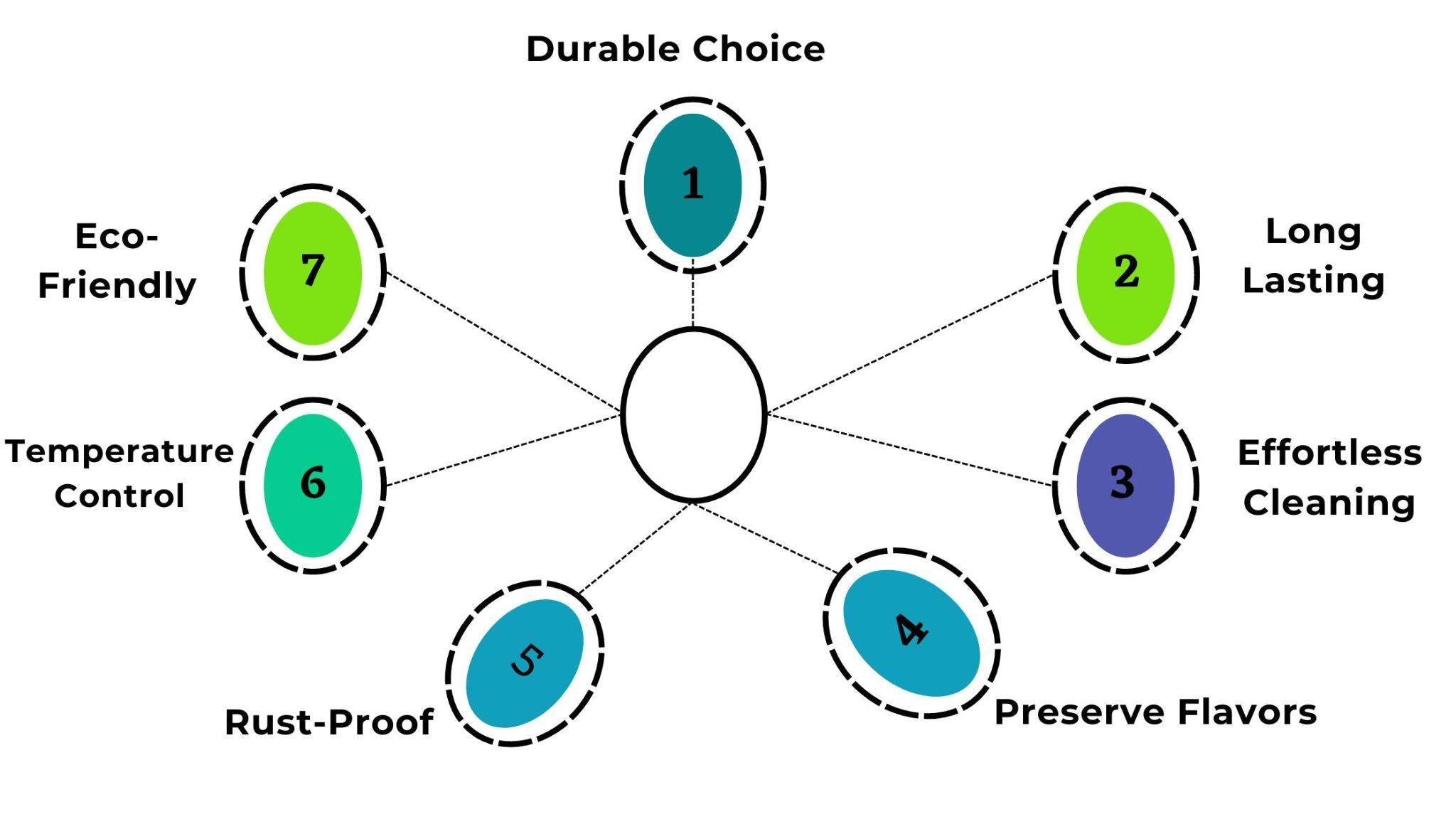
1. It survives the life you actually live
Drop a ceramic mug on a tile floor and you're sweeping up your morning. A steel tumbler bounces. It rides in the cup holder, gets knocked off the desk, lives in a hockey bag, and keeps going. That resilience is why it stays in rotation — you stop replacing cups and start reaching for the same one every day.
2. Cold at hour twelve, hot at hour six
This is the reason most people make the switch. Double-wall vacuum insulation puts a sealed pocket of nothing between your drink and the outside air, so heat has no way to cross. Fill a LAMOSE tumbler with iced water before a long drive and there's still ice at hour twelve. Pour your coffee in at 7 a.m. and it's still hot when the 9 o'clock meeting runs late. No sweat rings on the outside, no lukewarm surprise.
3. Yesterday's drink stays in yesterday
Plastic remembers everything. Lemonade on Monday shows up in your water on Tuesday. Steel is a neutral surface. It doesn't absorb flavor and it doesn't hand it back. Coffee tastes like coffee, water tastes like nothing, and the tumbler never picks up that faint plastic smell you get used to and then can't unsmell.
4. It won't rust on you
Steel earns the "stainless" name because chromium in the alloy forms an invisible layer that stops rust before it starts. Food-grade 18/8 holds that layer through years of coffee, citrus drinks, and dishwasher heat. In a tumbler that means the rim and threads stay clean instead of freckling with tiny rust spots the way cheap coated cups do.
5. Dishwasher tonight, done
Steel doesn't react with detergent, so the body goes on the top rack and comes out clean. If your water is hard and leaves a white film, a quick rinse in hot water clears it. A push-seal lid lasts longer with a hand wash, but the cup itself is built for the machine.
6. Your name, cut into the steel
A sticker peels. A printed logo fades after six washes. This is where a made-to-order tumbler leaves the shelf brands behind. In our Calgary workshop, a laser cuts your name, date, or logo through the color coat into the bare steel underneath. It's permanent. It can't wash off, scratch away, or fade. A cup with your name in the steel is a cup nobody borrows and forgets to return — it's the one you keep.
7. Buy once instead of every season
Add up a year of takeout cups and drugstore water bottles and the math gets embarrassing fast. One good tumbler ends that cycle. Made to order and built to last, a LAMOSE tumbler is meant to be the last one you buy for a long time. That's the quiet case for steel over plastic: not a slogan, just a cup that stays.
The short version
Steel beats plastic on taste, temperature, and lifespan, and it isn't close. Between steel tumblers, the grade printed on the label is the least of it — 18/8 food-grade is already more than enough for coffee and water. Add a name cut into it and you have the cup that stays in your hand instead of the drawer.
Made in Calgary
Laser-engraved tumblers, built to last
Double-wall vacuum insulated. 6 hours hot, 12 hours cold. Your name cut into the steel — permanent, made to order in our workshop.
Frequently asked questions
Are stainless steel tumblers safe for hot drinks?
Yes. Food-grade steel doesn't leach chemicals into hot liquid the way some plastics can, and double-wall insulation keeps the outside cool enough to hold. Coffee stays hot for about six hours without heating the cup in your hand.
Are stainless steel tumblers dishwasher safe?
The steel body is. Put it on the top rack and it comes out clean, since steel doesn't react with detergent. If your tumbler has a push-seal lid, hand-washing the lid makes it last longer.
What are the downsides of a stainless steel tumbler?
A good one costs more than a plastic cup up front, and you can't microwave it. That's the trade. In exchange you get years of use instead of a season, so the cost per use drops well below disposable.
How long does a stainless steel tumbler last?
Years. Food-grade steel resists the corrosion that pits and stains cheaper coated cups, and a laser engraving outlasts any sticker or print. Treated well, a good tumbler outlives the occasion you bought it for.
Does the grade of steel matter — 18/8 versus 316?
For everyday drinks, 18/8 food-grade steel (the same alloy as 304) is all you need — it's the standard used in cookware and kitchen sinks. 316, which LAMOSE uses in the Emerald line, adds molybdenum for extra resistance to salt and acid. It's a nice upgrade, not a requirement for a cup of coffee.
Written by Chen Deng, founder of LAMOSE. We've been cutting names into steel from our Calgary workshop since 2017 — one tumbler for a birthday, five hundred for a company, same laser either way.
Share:
Turns out, the World's best tasting coffee is hugged by Enamel
Why Choose Custom UV Printed Drinkware for Souvenir Shops?